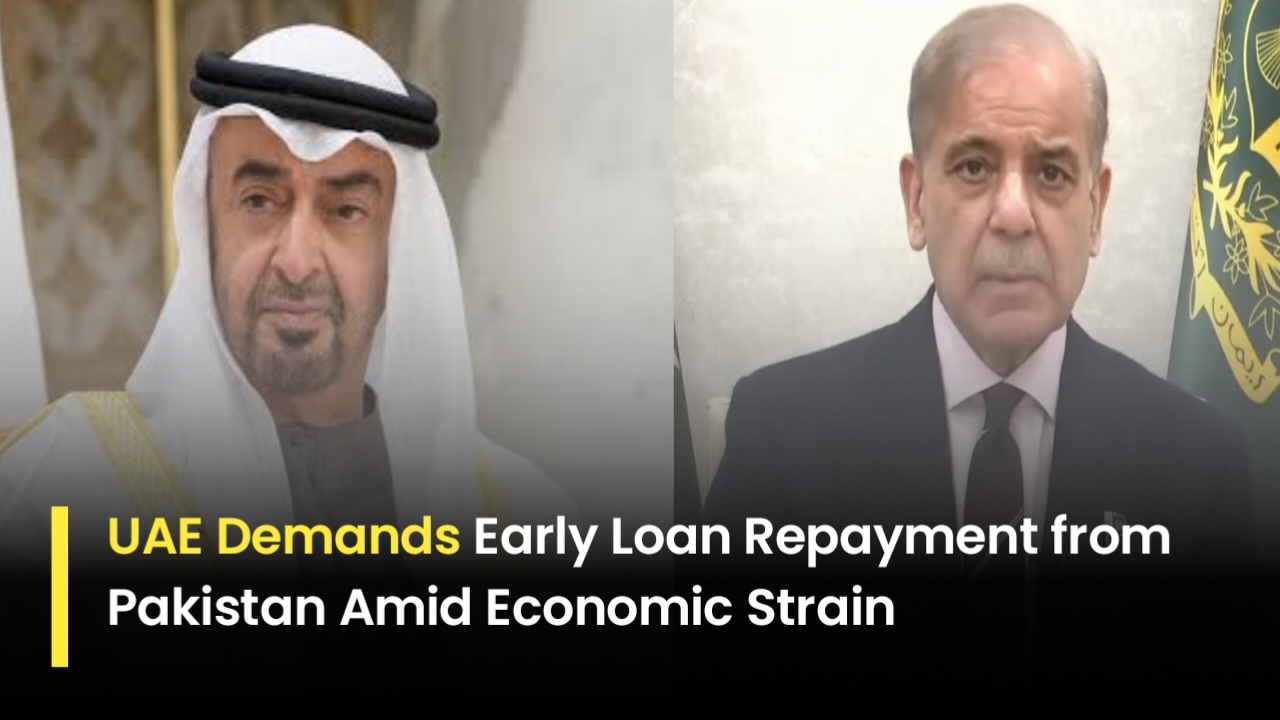
Islamabad, Pakistan – Pakistan’s already fragile economy has come under additional strain as tensions in West Asia continue to push global oil prices higher. The country is now facing a major setback after one of its key financial supporters, the United Arab Emirates (UAE), asked for repayment of a $3 billion loan (approximately PKR 25,000 crore), instead of extending or rolling it over as done in previous years.
This marks the first time in seven years that the UAE has refused to roll over its financial assistance to Pakistan, adding new pressure on Islamabad’s struggling fiscal situation.

Shift in Gulf Financial Support
Pakistan had long depended on the expectation that Gulf nations would extend repayment deadlines on loans, providing short-term relief to its external financing needs. However, changing geopolitical dynamics and tightening financial policies have disrupted that pattern.
The UAE’s decision has forced Pakistan to urgently reassess its repayment strategy at a time when its foreign exchange reserves are already under stress.
Economic Situation Under Pressure
Pakistan’s foreign exchange reserves currently stand at around $16.4 billion, barely enough to cover three months of imports. Analysts warn that repaying $3 billion in such conditions could push reserves to critically low levels, increasing economic vulnerability.

Exploring New Financing Options
To manage the situation, Pakistan is reportedly considering multiple fundraising routes:
- Panda Bonds: Pakistan is planning to raise funds in Chinese currency (yuan) through Panda Bonds for the first time. The initial target is around $250 million.
- Global Bond Markets: After a gap of four years, the country is also preparing to re-enter international markets with Eurobonds and Islamic Sukuk to attract global investors.
- IMF Support: Pakistan is expecting a $1.3 billion tranche from the International Monetary Fund (IMF), which could provide temporary financial relief.
IMF and World Bank Engagements
Pakistan’s Finance Minister Muhammad Aurangzeb is currently in Washington attending meetings of the IMF and World Bank. During discussions, he stated that the government is evaluating “all possible options” to meet its financial obligations.
However, when asked about potential assistance from China or Saudi Arabia, he declined to comment.