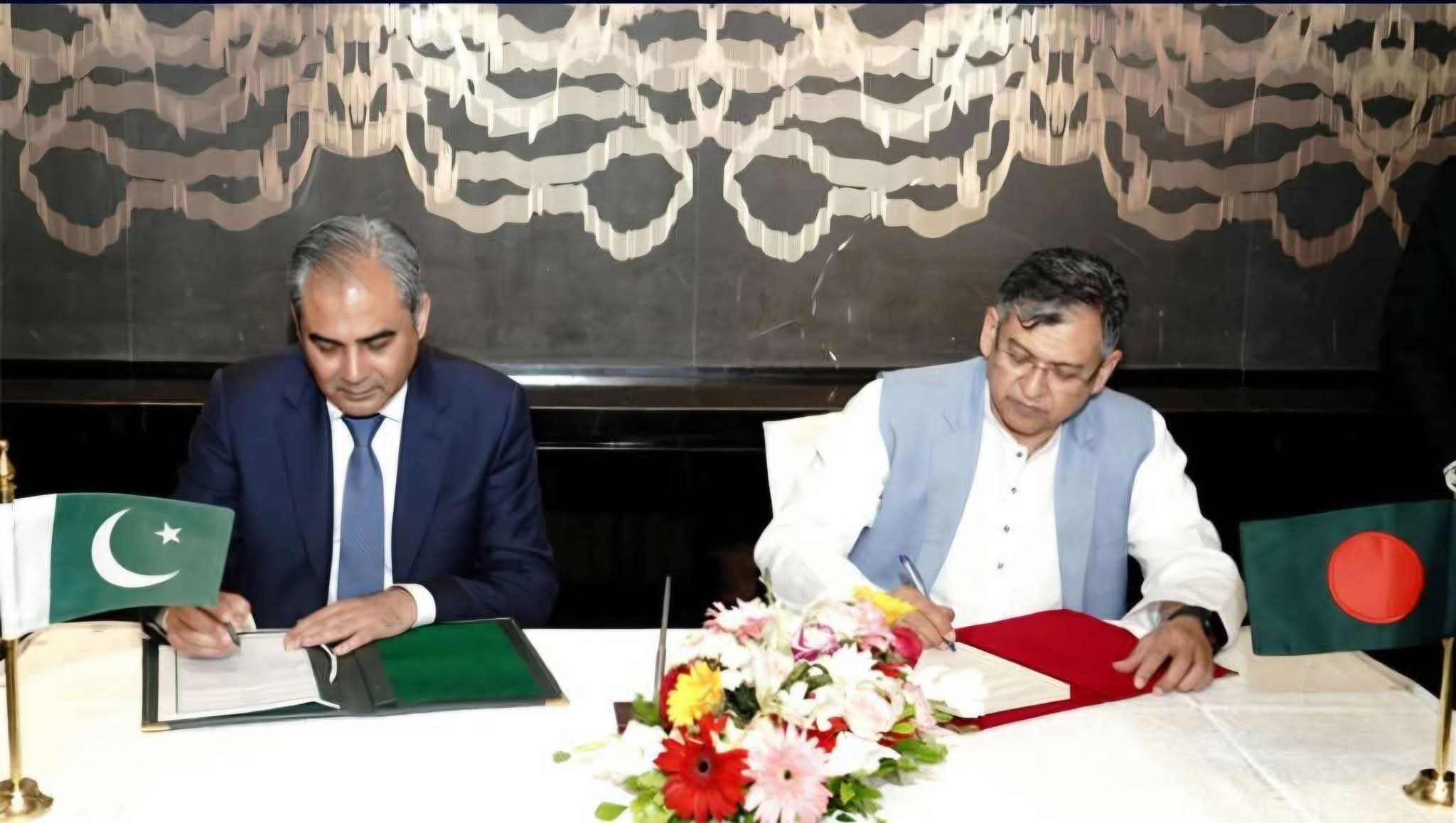
Dhaka: Bangladesh and Pakistan have signed a new memorandum of understanding (MoU) in Dhaka aimed at strengthening cooperation against drug trafficking, money laundering, and the illegal use of narcotics. The agreement was signed on Friday and focuses on intelligence sharing, joint operational coordination, and capacity-building efforts between the two countries.
However, the development has triggered widespread discussion, mainly because Bangladesh and Pakistan do not share a direct land border.


Intelligence Sharing and Joint Operations Included
Under the agreement, Bangladesh’s Department of Narcotics Control and Pakistan’s Anti-Narcotics Force (ANF) will act as focal points for regular communication and operational coordination.
Officials said both sides will exchange intelligence related to illegal drug networks, financial crimes linked to narcotics, and other cross-border criminal activities. Information shared under the agreement will remain confidential and cannot be passed to any third party without mutual approval.
MoU to Remain Valid for 10 Years
According to the terms of the agreement, the MoU will remain in force for 10 years, with an option to extend it through mutual consent. Authorities say the partnership is designed to improve enforcement capabilities and strengthen regional cooperation against organized crime.


Questions Raised Over “Border Security” Cooperation
The agreement has also raised political and strategic questions. Bangladeshi journalist Salah Uddin Shoaib Choudhury questioned the purpose of discussing border-related smuggling issues when Pakistan and Bangladesh are separated by thousands of kilometers and do not share any physical boundary.
He pointed out that Bangladesh’s land borders are connected only with India and Myanmar, making the nature of border-related cooperation with Pakistan a subject of public debate.
Allegations and Strategic Concerns Surface
Choudhury also made serious allegations on social media, claiming that since August 2024, Pakistan has been sending narcotics and weapons into Bangladesh, primarily through maritime routes. He further described the recent visit of Mohsin Naqvi to Dhaka as suspicious, noting that Islamabad reportedly informed Dhaka about the visit only on May 5.
These claims have not been independently verified, but they have fueled speculation about the broader strategic implications of the agreement and the confidential nature of intelligence sharing between the two nations.
Regional Security Experts Watching Closely
With the agreement now officially in place, regional observers are closely monitoring how the partnership develops and whether it remains focused purely on anti-narcotics cooperation or expands into wider security collaboration.