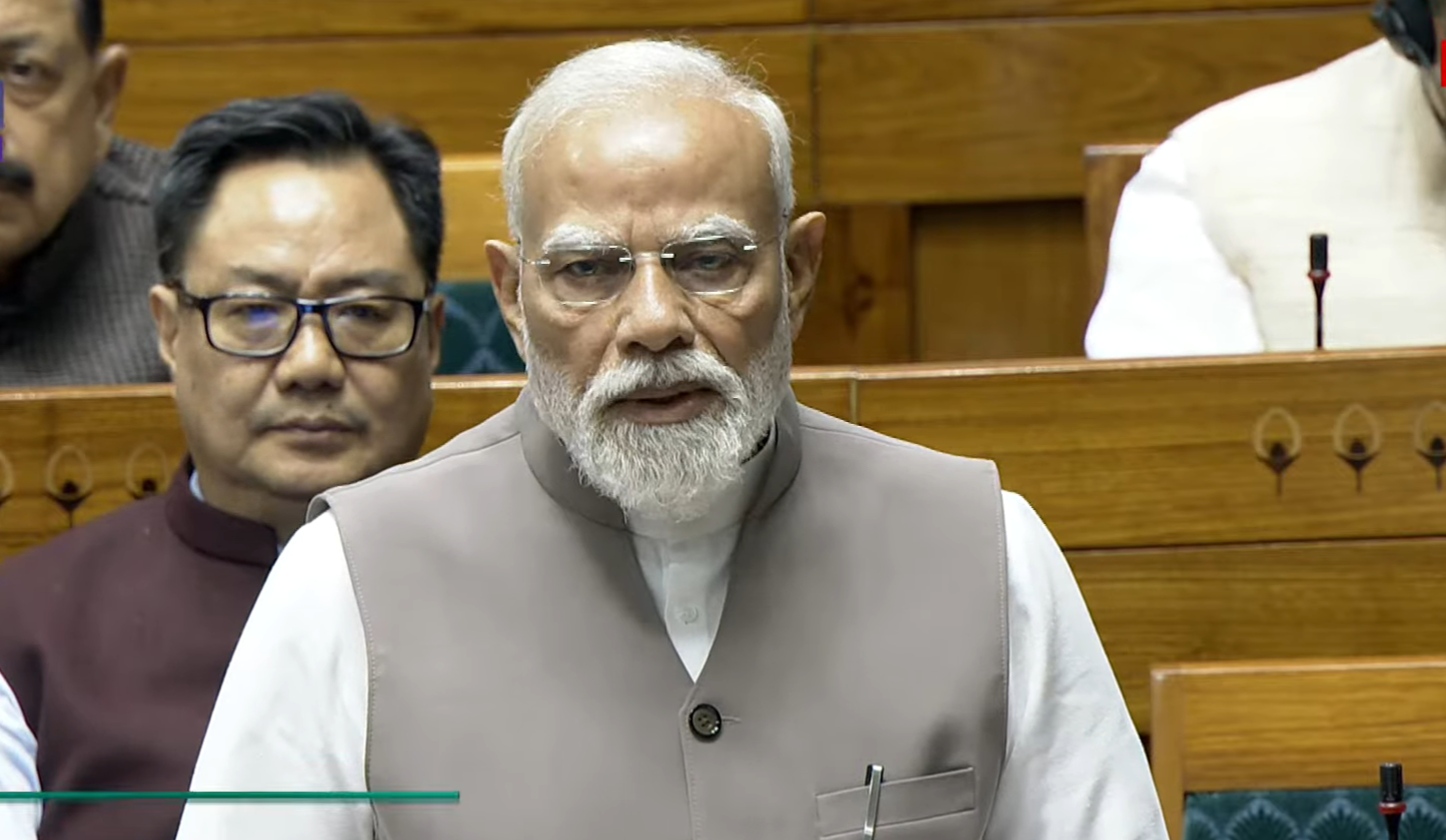
New Delhi | After an intense and lengthy debate in the Lok Sabha, the proposed Constitutional Amendment Bill on women’s reservation and delimitation failed to secure the required majority on Friday. Despite significant participation and political attention, the bill could not cross the crucial two-thirds mark needed for passage.
Voting Outcome: Numbers Didn’t Add Up
A total of 528 Members of Parliament took part in the voting. While 298 MPs supported the bill, 230 voted against it. However, the Constitution requires at least 352 votes in favor for such an amendment to pass.


Announcing the result, Om Birla confirmed that the bill had not received the necessary backing, effectively halting further legislative action on it. Following this outcome, the government also chose not to proceed with voting on two related bills.
Government Reacts, Blames Opposition
Parliamentary Affairs Minister Kiren Rijiju described the bill as a landmark effort aimed at empowering women. Expressing disappointment, he stated that the opposition failed to support a historic opportunity to strengthen women’s rights and representation.
He emphasized that the government remains committed to advancing women’s empowerment and will continue working toward securing their rights.
A Rare Legislative Setback
This marks a significant moment in recent parliamentary history. It is the first time in the past 12 years that a Constitutional Amendment Bill introduced by the Modi government has failed to pass in the Lok Sabha.
21-Hour Debate Sees Wide Participation
The discussion on the bill stretched for nearly 21 hours, reflecting its political and social importance. Around 130 MPs took part, including 56 women parliamentarians who actively voiced their perspectives during the debate.
Sharp Exchanges in the House
During his reply to the debate, Home Minister Amit Shah launched a strong attack on the opposition. He argued that resistance to delimitation was, in effect, opposition to increasing representation for SC and ST communities.
He also dismissed any possibility of religion-based reservations and assured that southern and smaller states would retain fair representation even after the delimitation process.
What the Bill Proposed
The proposed amendment aimed to redraw parliamentary constituencies based on the 2011 Census. One of its major provisions included increasing the number of Lok Sabha seats from 543 to a maximum of 850.
Additionally, the bill sought to implement 33% reservation for women in the Lok Sabha and state legislative assemblies before the 2029 general elections. It also included provisions to expand seats in state assemblies and Union Territories to effectively implement the reservation.
What Lies Ahead
Although the bill did not pass, the debate has clearly highlighted the ongoing political divide over representation, reservation, and electoral reforms. The government has signaled that its push for women’s rights and greater participation in governance will continue, suggesting that this issue is far from settled.