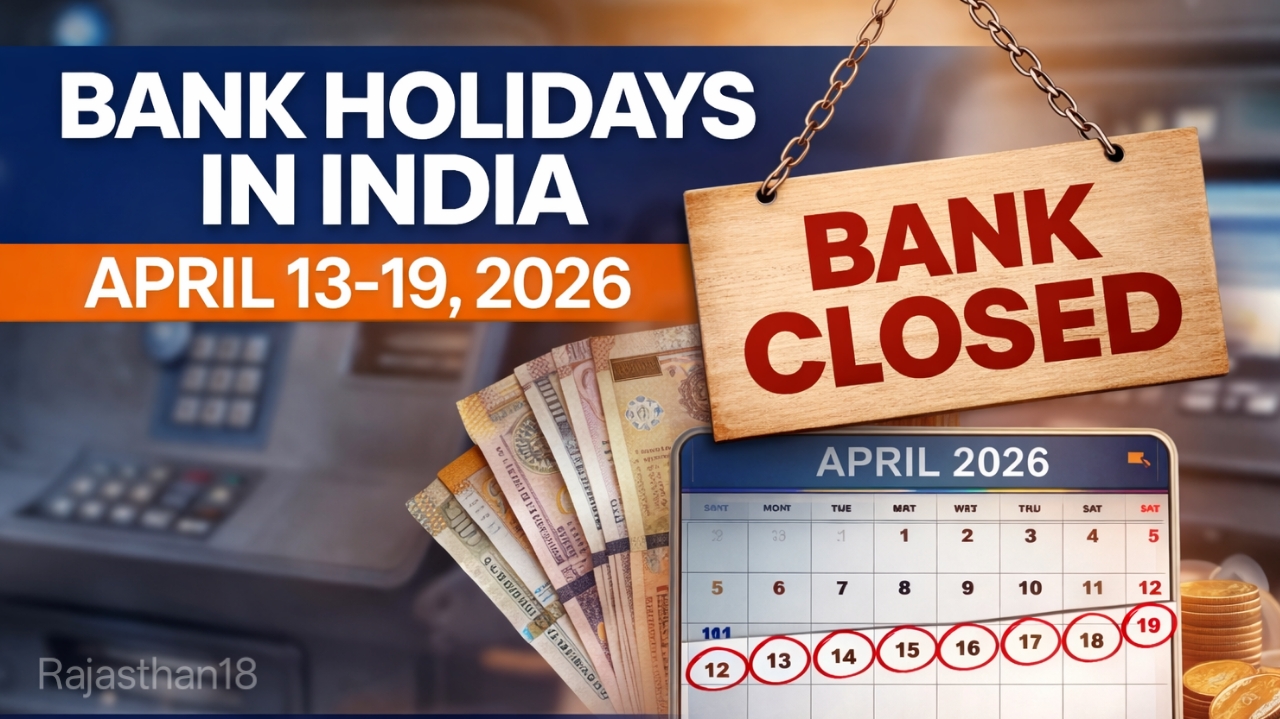
Bank Holiday News: Several bank branches across India will remain closed on different days between April 13 and April 19, 2026, as per the holiday calendar issued by the Reserve Bank of India (RBI). The closures will vary from state to state due to regional festivals and regular weekly offs, which may impact in-person banking services.
April 14: Major Nationwide Holiday
The most significant closure falls on April 14, marking the birth anniversary of Dr. B.R. Ambedkar. On the same day, multiple festivals including Maha Vishuva Sankranti, Bihu, Tamil New Year, Baisakhi, and Bisu are being celebrated in different parts of the country.


Due to this, bank branches will remain shut in major cities such as Delhi, Mumbai, Kolkata, Chennai, Bengaluru, Hyderabad, and Lucknow, along with several other regions.
Closures Continue on April 15 and 16
Banking services will also be affected on April 15 in many states due to occasions like Pohela Boishakh, Bohag Bihu, Vishu, and Himachal Day. These holidays will mostly impact northeastern states and parts of South India.
On April 16, bank closures will be limited to select cities including Itanagar, Kochi, Kolkata, and Thiruvananthapuram, mainly due to Bohag Bihu celebrations.


Sunday Shutdown on April 19
As April 19 falls on a Sunday, banks will remain closed across the country. It is worth noting that although banks usually remain shut on the second and fourth Saturdays, April 13–19 includes the third Saturday, so banks will remain open on that day.
RBI Holiday Categories
The RBI classifies bank holidays into three categories:
- Holidays under the Negotiable Instruments Act
- RTGS (Real Time Gross Settlement) holidays
- Account closing-related holidays
Since these holidays differ by region, customers are advised to check with their local bank branch before planning a visit.
Digital Services to Remain Uninterrupted
Despite branch closures, customers can continue to use online banking services without disruption. Mobile banking apps, internet banking, and ATMs will remain operational, allowing users to withdraw cash, transfer funds, check balances, and complete other essential transactions.