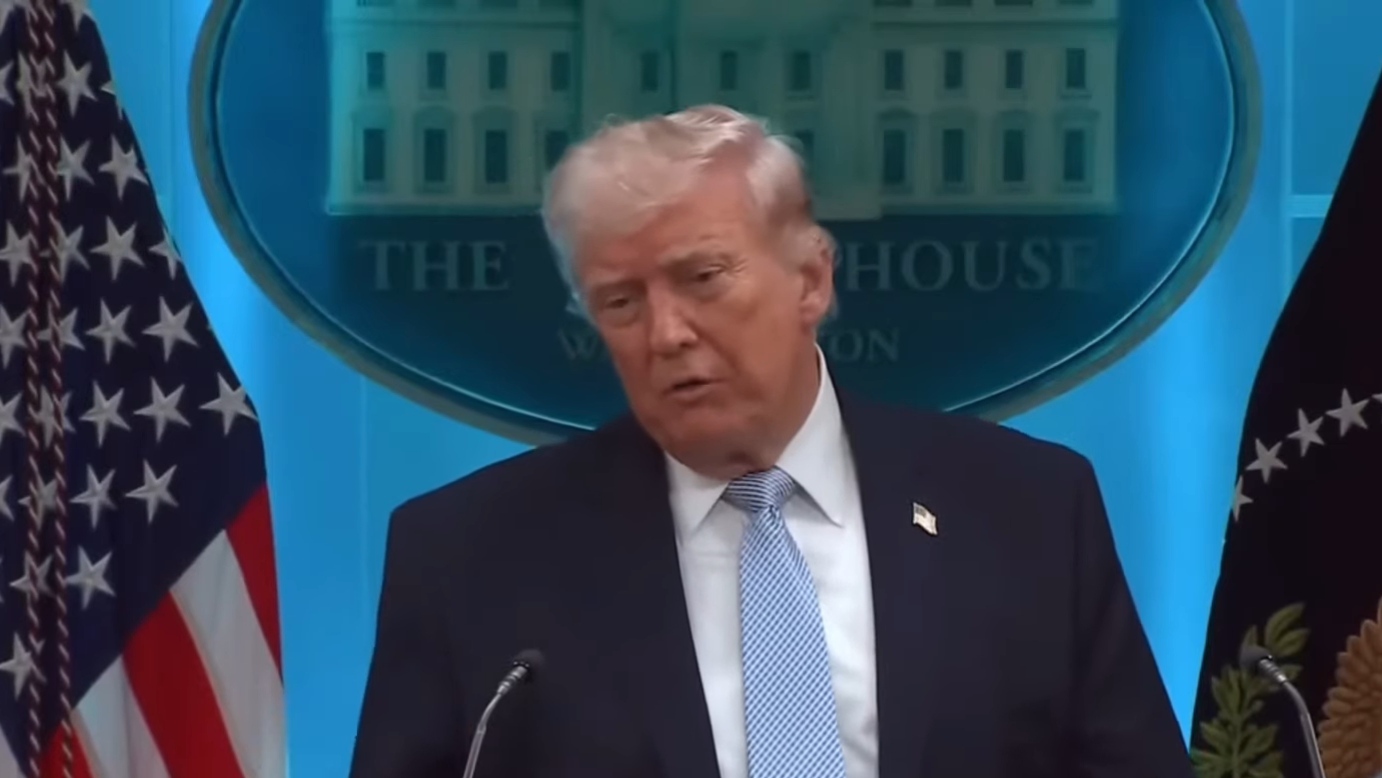
Washington: In a significant blow to US President Donald Trump, America’s federal trade court has ruled that his administration’s global tariff order was unlawful and must be withdrawn. The ruling comes after Trump announced a 10 percent global tariff earlier this year as part of his trade strategy.
Court Questions Use of 1974 Trade Law
In a 2-1 majority decision, the federal court stated that the Trump administration exceeded its legal authority by using Section 122 of the Trade Act of 1974 to justify the tariffs. According to the judges, this provision was originally created to address specific balance-of-payments crises linked to the international monetary system of the 1970s, not to deal with modern trade or current account deficits.
Judges Say Legal Conditions Were Not Met
Judges Mark A. Barnett and Claire R. Kelly said in their opinion that the administration failed to prove that the legal requirements under the law had been satisfied before imposing the tariffs.
Trump had announced the tariffs in February under Section 122, a provision that allows the president to impose a temporary import surcharge of up to 15 percent for a period of 150 days under limited circumstances.
Trade Deficit Cannot Replace Balance-of-Payments Crisis
The court noted that the administration relied on trade and current account deficits instead of demonstrating the existence of a genuine balance-of-payments crisis, which was the original purpose behind the legislation passed in 1974.
The judges warned that accepting such a broad interpretation of the law could effectively hand the president unlimited authority to impose tariffs without meaningful restrictions.
Earlier Tariff Measures Also Faced Legal Trouble
This is not the first legal setback for Trump’s trade agenda. Earlier this year, the US Supreme Court had also struck down a previous tariff framework introduced by his administration.