
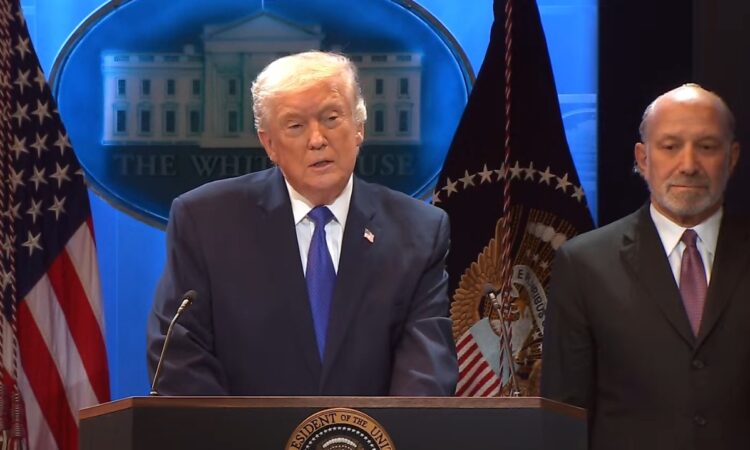
Washington DC, United States : There has been another major turning point in US politics and trade policy. The Supreme Court of the United States struck down President Donald Trump’s much-discussed “reciprocal tariff” plan. However, within hours of the decision, Trump launched a new tack, announcing the imposition of a 10% global tariff on all countries.
These rapid developments have increased uncertainty in international markets. Now, Indian investors are focused on Dalal Street, which opens on Monday.
What was the Supreme Court’s decision?
The US Supreme Court rejected the administration’s proposed high “reciprocal tariff” on legal grounds. This decision is being considered a major milestone for global trade, as it averted the threat of additional tariffs on many countries.
This is considered a relief for a major exporting country like India. The US is India’s major export market, and trade worth an estimated $50 billion was under potential pressure.
How can Indian exporters find relief?
While reciprocal tariffs of up to 18% were previously feared, now, after their removal, only a 10% duty is likely to be imposed on approximately 55% of Indian exports.
This could directly benefit sectors such as textiles and gems and jewelry, which have been under pressure due to uncertainty in recent times. Lower tariffs are expected to improve companies’ margins.
Trump’s New Tactics: 10% Global Tariff
Immediately after the court’s decision, Trump stated that he has the “right to do whatever he wants.” He announced the imposition of a base global tariff of 10%, which could take effect within the next three days.
However, under US law, this measure can remain in place for a maximum of 150 days without congressional approval.
What is Section 122?
The legal provision Trump invoked is Section 122 of US trade law. This provision allows the President to impose tariffs up to 15% to balance the trade deficit.
Interestingly, this provision does not require a lengthy investigation or detailed report. Experts believe Trump is using this as a temporary ‘bridge’ to maintain control over trade policy even after the court’s decision.
Clash with the Court and Political Rhetoric
Following the decision, Trump sharply criticized some judges. He called some members of the court “a disgrace to the country.” Notably, some of the judges who ruled against the tariffs were appointed by Trump during his tenure.
This rhetoric could spark new controversy in American politics in the coming days.