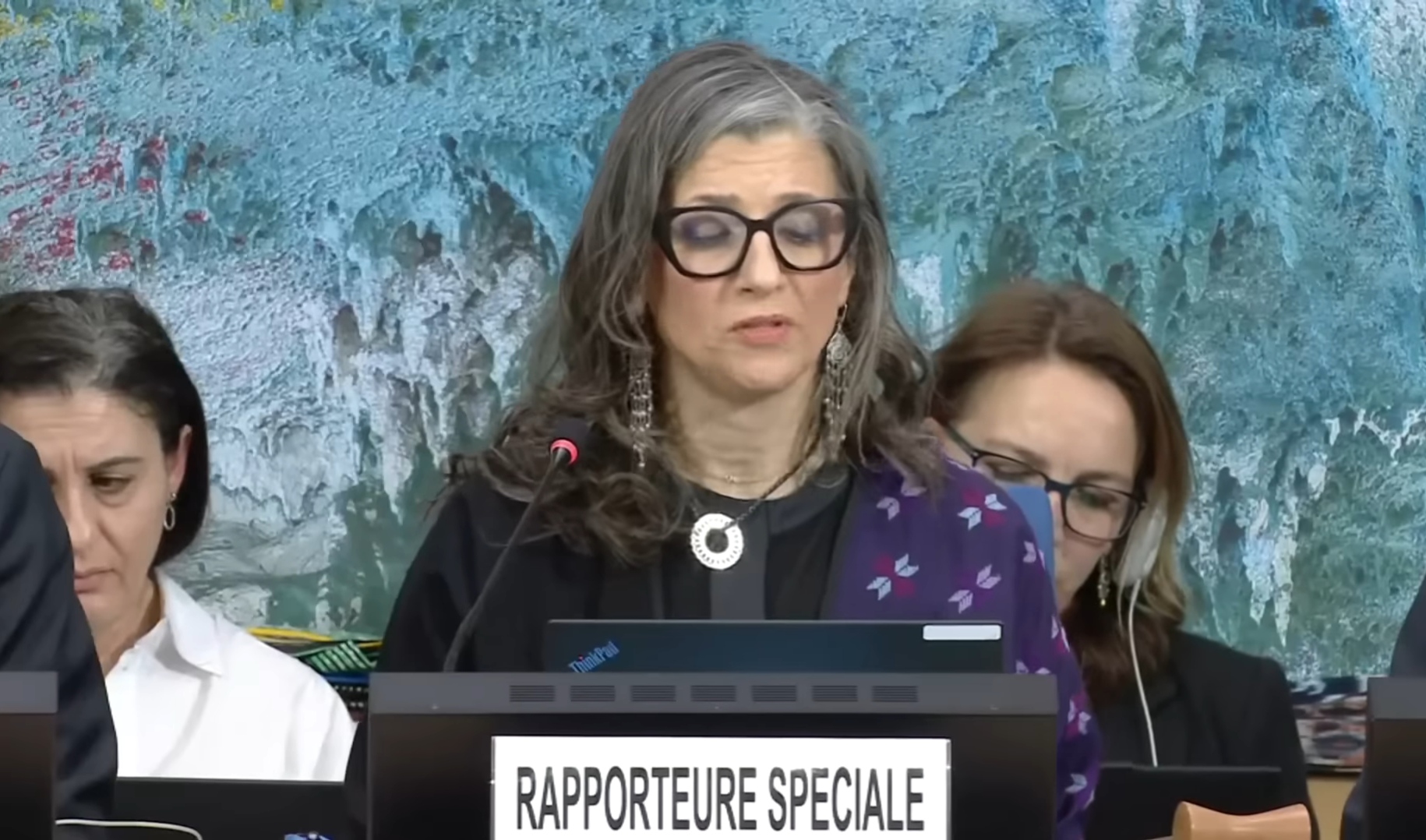
US News : A recent report titled “Torture and Genocide” has stirred global discussion after it was presented at the United Nations Human Rights Council on March 23 by UN Special Rapporteur Francesca Albanese. In her findings, Albanese questioned India’s position in relation to Israel, suggesting that New Delhi could face both legal and moral scrutiny under international law.
Allegations of Legal Responsibility
Speaking to The Hindu, Albanese stated that India’s close ties with Israel may put it at odds with international legal obligations. She referred to observations by the International Court of Justice, which has previously termed Israel’s occupation as unlawful and urged nations to halt arms-related dealings. According to her, continued cooperation in such areas could be seen as a violation of those directives.

Moral Questions Raised
Beyond legal concerns, Albanese also highlighted what she described as India’s moral responsibility. She pointed out that India’s historical stance on justice and global equity traditionally aligns against such situations, but current policies appear to reflect a different direction.
Situation in Gaza Described as Severe
The report claims that since October 2023, Israel has allegedly carried out systematic torture against Palestinians, both in Gaza and in detention centers. It describes Gaza as an “open-air prison,” where living conditions have deteriorated sharply. Severe shortages of medical supplies, sanitation, and safety have reportedly worsened the humanitarian crisis.
Albanese further noted that nearly 190,000 people are confined within a highly restricted area of less than 50 square kilometers, calling the conditions “worse than a concentration camp.”


Policies Extending Beyond Prisons
The report suggests that restrictive measures are not limited to detention facilities but extend to civilian life as well. Tactics such as limiting access to food and essential services are described as methods of pressure aimed at weakening the population’s resilience.
Targeting of Professionals
Another concern raised in the document is the alleged targeting of lawyers, doctors, journalists, and human rights defenders. Albanese argued that when such practices become widespread and systematic, they reflect a broader state policy rather than isolated incidents.
Reference to India-Israel Ties
Albanese also mentioned Narendra Modi and his February visit to Israel, along with the “strategic partnership” between the two nations. She suggested that such alliances, in the current context, may contribute to weakening international legal norms.
Global Response Remains Divided
The report notes that countries like Colombia, South Africa, Spain, Slovenia, and Malaysia have taken steps to address the situation. However, Albanese emphasized that broader international action remains difficult due to geopolitical interests and influence from powerful groups.