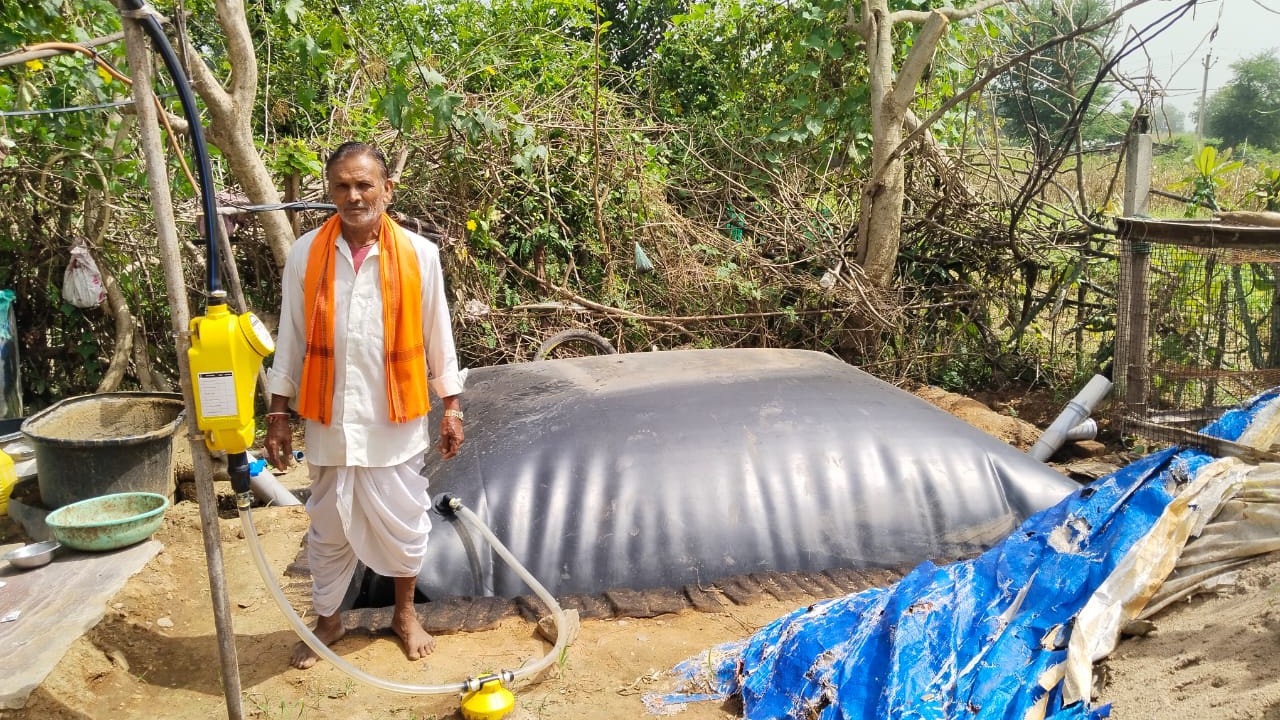
Banswara, Rajasthan : In many parts of rural India, rising fuel prices have made daily life increasingly difficult. This pressure is deeply felt in the tribal regions of Rajasthan, where families in villages like Palibada, Sasawadla, Lohariya, Maskamohdi, Bachlipada, Dugariyapada, Bijalpur, and Amlipada in Sajjangarh tehsil of Banswara district have been struggling to manage basic cooking needs.
With LPG cylinder prices climbing and forest cover shrinking, firewood has become harder to find. Women often had to walk several kilometers just to collect wood, spending hours every day while also risking their health due to constant exposure to smoke.


A Community-Led Shift to Biogas
Faced with these challenges, local communities, with support from the development organization Vagdhara, began adopting biogas as an alternative energy source. Through its Hiran, Mahi, and Mangarh units, the organization facilitated the installation of biogas plants across the region.
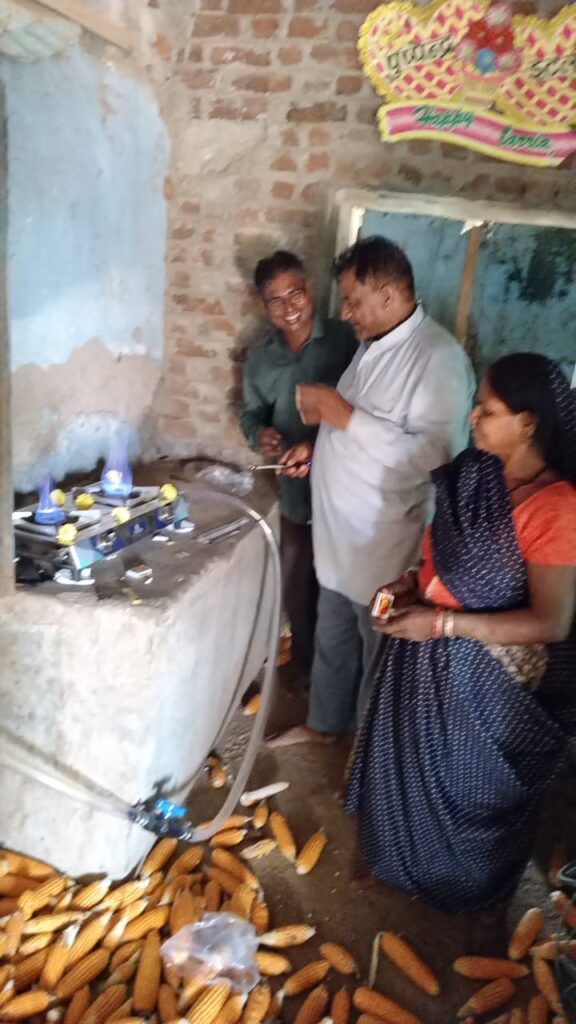
By 2025, around 280 biogas units had been set up, including 40 new installations in the above-mentioned villages alone. Villagers were trained to understand the simple working of the system—mixing cow dung with water in a pit, allowing gas to collect in a dome, and channeling it directly to kitchen stoves.
What initially seemed like a new technology quickly became a natural part of daily life.


Real Impact on Daily Life
The results have been both practical and encouraging. Sarita Rakesh Damor from Maskamohdi village shares that by using just 15 kilograms of cow dung and 10 liters of water daily, her family gets enough gas for cooking throughout the day—without spending any extra money.
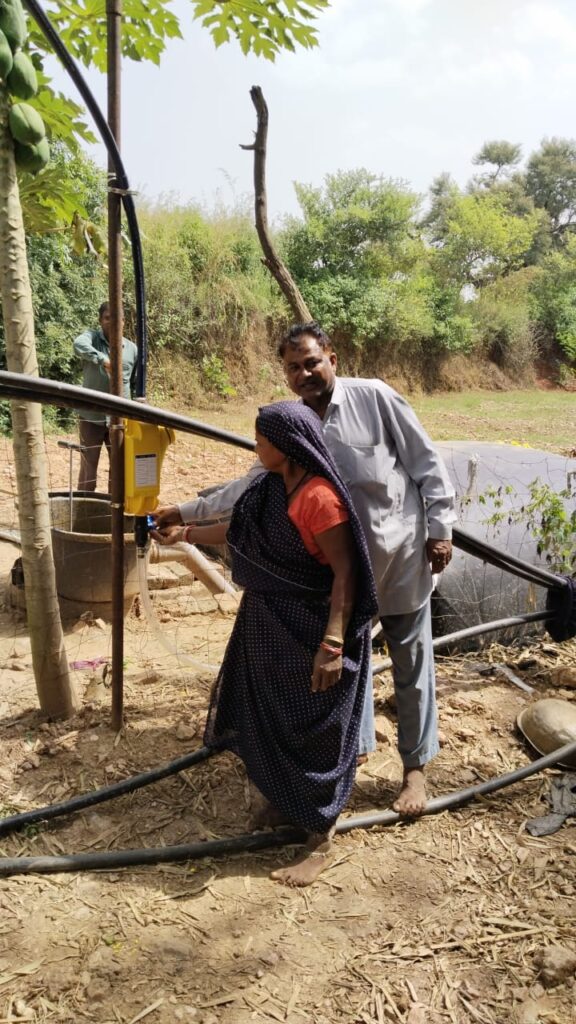
Similarly, Sita Katara from Sasawadla says her kitchen is now smoke-free, cooking takes less time, and the need to search for firewood has completely disappeared.
For farmers like Thavar Chand Hakri, relying only on LPG was not sustainable due to irregular income. After installing a biogas unit, his family saved around ₹5,000 within five months. Others, like Parsing Muniya and Dhansingh Katara, report producing sufficient gas daily using a similar method.
Savings That Stay Within the Village
On average, each household is saving up to ₹5,000 annually. These savings come not only from reduced LPG use but also from lower spending on chemical fertilizers.
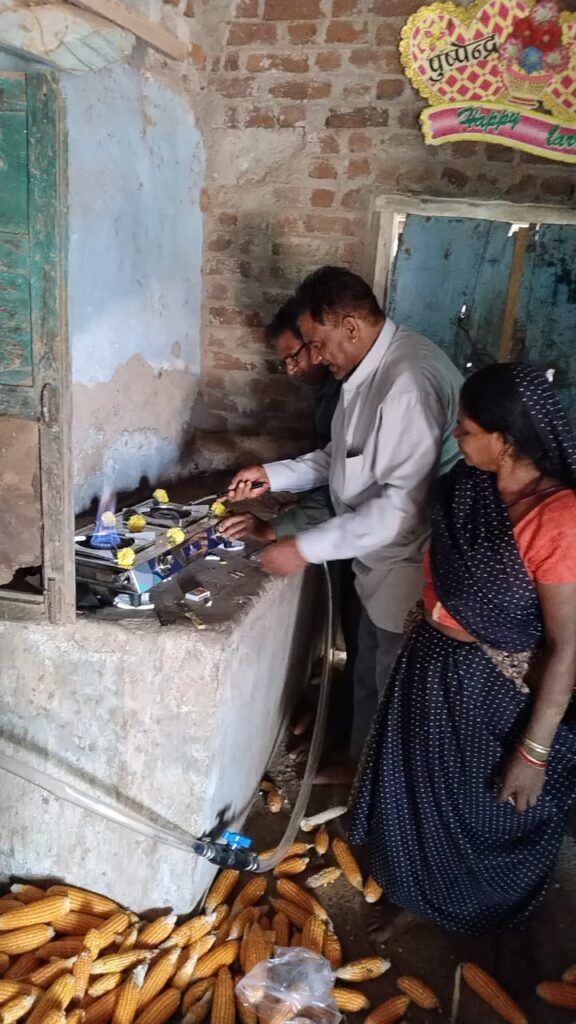
Across 280 families, this adds up to nearly ₹14 lakh saved every year—money that now stays within the community and is being used for children’s education, healthcare, and agricultural improvements.
Boost to Sustainable Farming
Biogas plants also produce slurry, a nutrient-rich organic fertilizer left after gas generation. Farmers have found that regular use of slurry improves soil fertility, enhances crop quality, and reduces overall farming costs.
This has created a strong link between energy production and agriculture, making the system even more valuable for rural livelihoods.
Women at the Center of Change
Perhaps the biggest transformation has been in the lives of women. Earlier, they spent hours in smoke-filled kitchens, leading to eye irritation, coughing, and breathing issues.
With biogas, kitchens are now clean and smoke-free. Cooking is faster, and the time saved is being used for children’s education, farming activities, and personal development. While there may not yet be official data, women across these villages consistently report noticeable health improvements.
Positive Impact on the Environment
Reduced dependence on firewood has eased pressure on nearby forests. At the same time, using cow dung in biogas plants instead of leaving it to decompose in the open helps control methane emissions.
In the context of climate change, such localized and practical solutions hold significant value.
A Model Built by the Community
What makes this initiative truly remarkable is that it was not imposed from outside. The villagers themselves took the initiative, women played a leading role, and the community collectively embraced the change.
Vagdhara acted as a facilitator, but the real transformation came from the people who chose to solve their own problems.
A Simple Idea, A Powerful Change
The story of these villages in Banswara highlights an important truth—self-reliance does not always require complex solutions. Sometimes, it begins with something as simple as cow dung, turning everyday waste into a source of energy, savings, and dignity.
Report – Vikas Parasram Meshram